We are a small, welcoming, friendly community. Our services typically feature Holy Communion, primarily using the Church in Wales liturgy, with occasional seasonal variations. We use a blend of traditional and contemporary hymns and songs recorded by our Digital Worship Band.
We would love to welcome you!
Donations Made Easy
Services
- Sunday 11.00 – Parish Eucharist
Church Hall
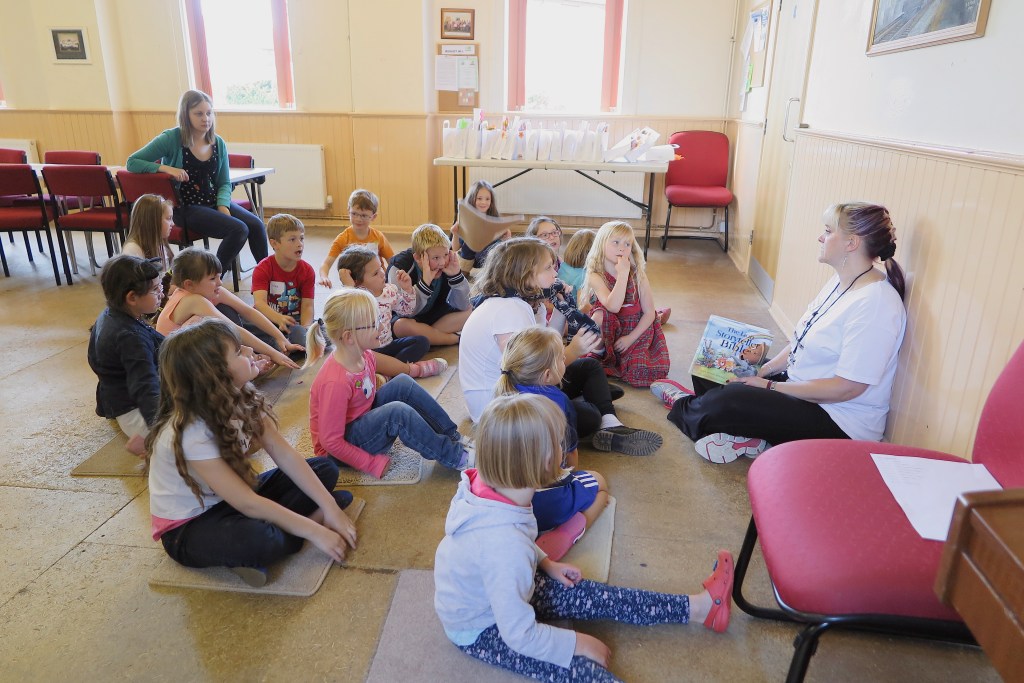
For Hire
please contact:- Ailsa Thomas 01291 420552 or email ailsalorraine1946@gmail.com
About the Church
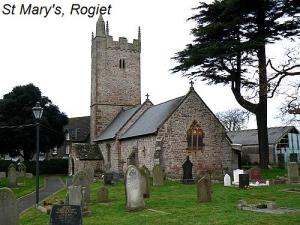
The Church of St. Mary’s in Rogiet stands adjacent to the manor house, once the home of the Gamages, the earliest lords of the manor. The Gamages likely built the church primarily for their own use.
While the church’s initial dedication was to St. Hilary, it’s unclear whether this refers to the Welsh St. Eleri, an eighth-century abbot, or St. Hilary of Arles, in southern France. The latter suggests an early connection to the Christian church in Gaul.
If the Gamages, who arrived with William the Conqueror, chose the dedication, it might be more likely that they intended St. Hilary of Poictiers, who died in 367 AD. However, it’s unlikely that any of these saints visited Rogiet. The dedication is likely a symbolic gesture honouring their memory.
Early churches sometimes lacked fonts, relying on nearby wells for baptisms. The font in St. Mary’s, though plain, is well-crafted and likely the oldest surviving element. It features a large, round bowl with a short stem and a splayed base. Clasps once secured the font lid, preventing misuse of the holy water.
While the church itself has undergone significant changes, the font remains a testament to the reverence in which it was held. Traces of decoration, including blue paint and plaster, suggest that it was once more ornate.
St. Mary’s is a charming, unpretentious country church dating primarily from the 13th century, with modifications made in the 14th and 15th centuries. It’s a typical small manorial church, featuring a chancel, nave, and western tower, and is remarkably beautiful.
Historical records indicate that the church was part of the Lower Gwent deanery during the time of Bishop Henry of Llandaff (1193-1218), placing its origins in the early 13th century or possibly the 12th.
One notable figure associated with Rogiet is William Blethin, a local rector who later became the Bishop of Llandaff. While his family home was in Shirenewton, it’s uncertain if he ever served at Rogiet. His substantial income from multiple parishes in England likely funded his education at Oxford, where he earned a Doctor of Civil Law degree in 1562. He was subsequently consecrated Bishop of Llandaff in 1557.
 St Mary's Caldicot ,Portskewett & Rogiet